Dr. Linder's Blog
Posted On: November 30, 2011 Author: The Office of Dr. Stuart Linder Posted In: Body Sculpting, Liposuction
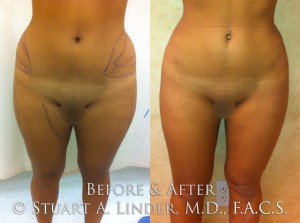
REDUCING THE GYNOID APPEARANCE MICRO LIPOSUCTION The above patient is a young 22-year-old female presenting with gynoid appearance, significant iliac crest roll hip fat as well as anteromedial, posterolateral and infragluteal fold fat. The patient is an excellent candidate for tumescent liposuction using micro liposuction techniques with infiltration of tumescent fluid. The patient underwent the […]
Read More
Posted On: November 29, 2011 Author: The Office of Dr. Stuart Linder Posted In: Breast Asymmetry, Breast Augmentation, Home, Tubular Breast
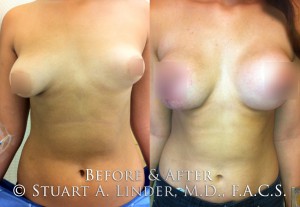
TUBULAR BREAST DEFORMITY BREAST ASYMMETRY – SEVERE The below case is a patient who is 20 years old, presenting with severe tubular breast deformity on the left with severe breast asymmetry and right breast ptosis. To reconstruct this young lady’s breasts in order to create a normal appearance, requires both different volume implants as well […]
Read More
Posted On: November 22, 2011 Author: The Office of Dr. Stuart Linder Posted In: Breast Augmentation, Breast Implants, Breast Revision, Home
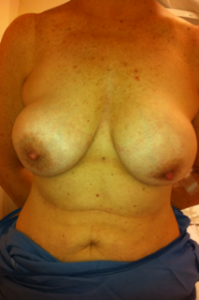
DOW CORNING RUPTURED CASE 2 The above patient presents with silicone gel implants placed 34 years ago. These are ruptured silicone gel implants that had been placed over one-third of a century ago. The patient left the implants in and has now noticed increasing pain. An MRI shows intra and extracapsular ruptured silicone implant and […]
Read More
Posted On: November 15, 2011 Author: The Office of Dr. Stuart Linder Posted In: Home, Plastic Surgery

Beverly Hills Patients present to us in greater numbers for consultation, for breast augmentation, breast revision, breast lift, breast reduction, tummy tuck and lipocontouring. With respect to your breast augmentation or breast revision consultation, it is important that the patient first of all seek a Board Certified Plastic and Reconstructive Surgeon, a Diplomate of the […]
Read More
Posted On: November 10, 2011 Author: The Office of Dr. Stuart Linder Posted In: Home

ADVANCES IN MULTI-SPECIALTY AESTHETIC AND PLASTIC SURGERY SYNPOSIUM This weekend, November 4-6, I attended the Cedars-Sinai Medical Center Plastic Surgery weekend of conferences. Topics of this year’s conference included Dental Plasty Techniques, Selection of Options in Breast Enhancement and Revision Surgery, Fat Grafting Technique, including Facial, Breasts and Body Contouring, Primary and Secondary Rhinoplasty Surgery, […]
Read More
Posted On: November 08, 2011 Author: The Office of Dr. Stuart Linder Posted In: Breast Augmentation, Breast Implants, Breast Lift, Breast topics, Home
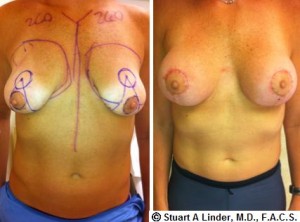
Patients often present with loss of upper fullness of their breasts, referred to as involutional upper pole atrophy as well as severe skin laxity or referred to as grade 3 ptosis. These patients do well with implants placed as well as a mastopexy or skin removal and raising of the nipple areolar complex at the […]
Read More
Posted On: November 03, 2011 Author: The Office of Dr. Stuart Linder Posted In: Home, Media

On November 1, 2011 I was on Entertainment Tonight to discuss a patient regarding Tummy Tuck Revision. I always appreciate the opportunity to consult for ET CBS television. I will expand on this patient and procedure in an upcoming blog.
Read More
Posted On: November 01, 2011 Author: The Office of Dr. Stuart Linder Posted In: Breast Augmentation, Breast Implants, Breast topics, Home
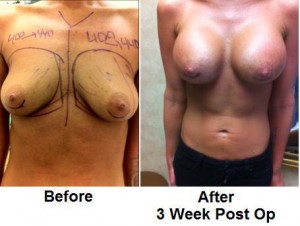
The patient to the left is an excellent example of a patient who has involutional upper pole atrophy, loss of upper pole fullness of her breasts, slight droop of the nipple areolar complex with grade 1 ptosis. This patient is an excellent candidate for high profile saline implants in order to regain upper pole fullness […]
Read More
Posted On: October 28, 2011 Author: The Office of Dr. Stuart Linder Posted In: Liposuction
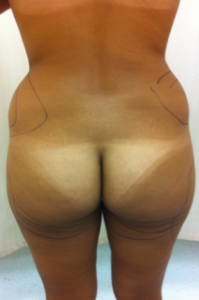
The patient to the left presents with a gynoid appearance with severe lipodystrophy of the iliac crest rolls. She has a disproportionate amount of fat on the hip area. She also has significant banana rolls which extend under the infragluteal fold out to the lateral thigh saddlebags. This patient underwent tumescent liposculpture technique in a bidirectional fashion […]
Read More